
Formulaires et services web
Form Forge
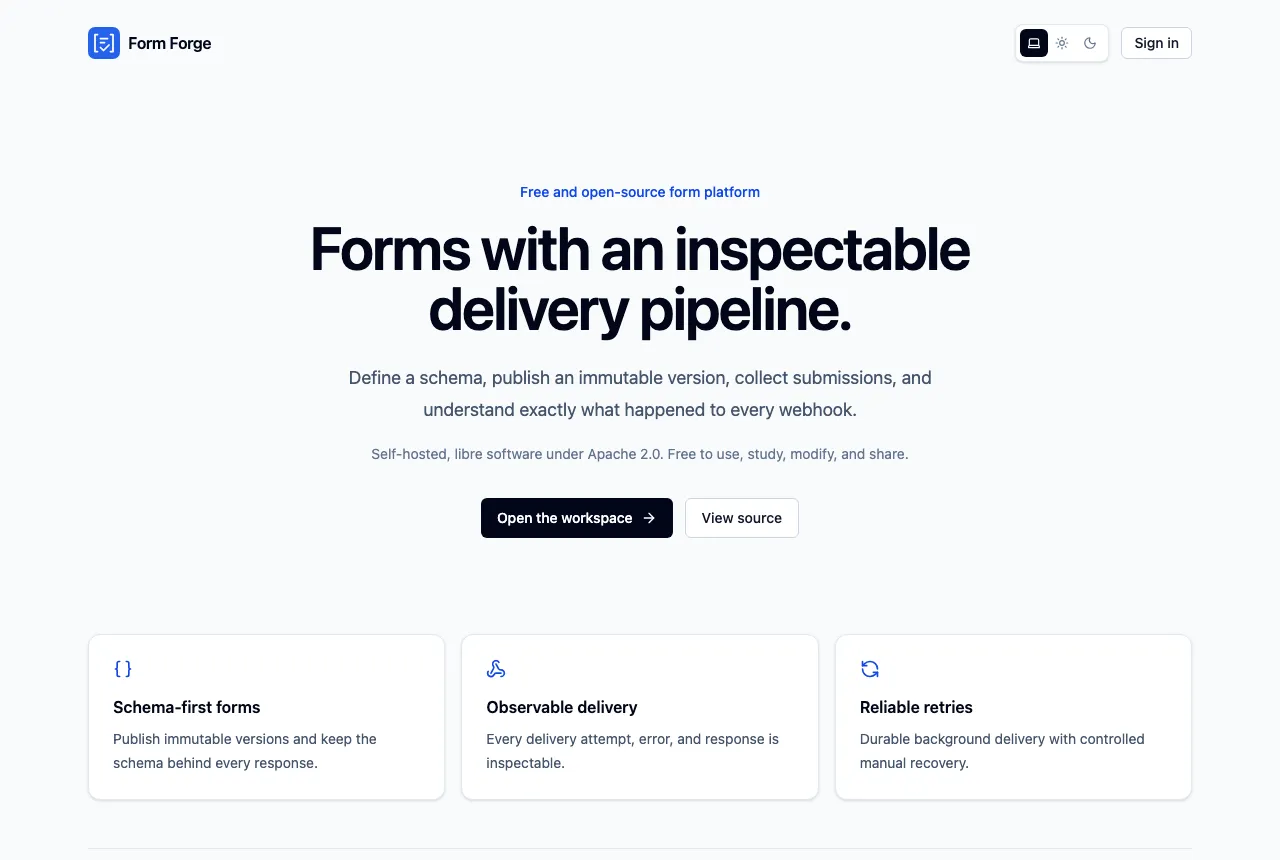
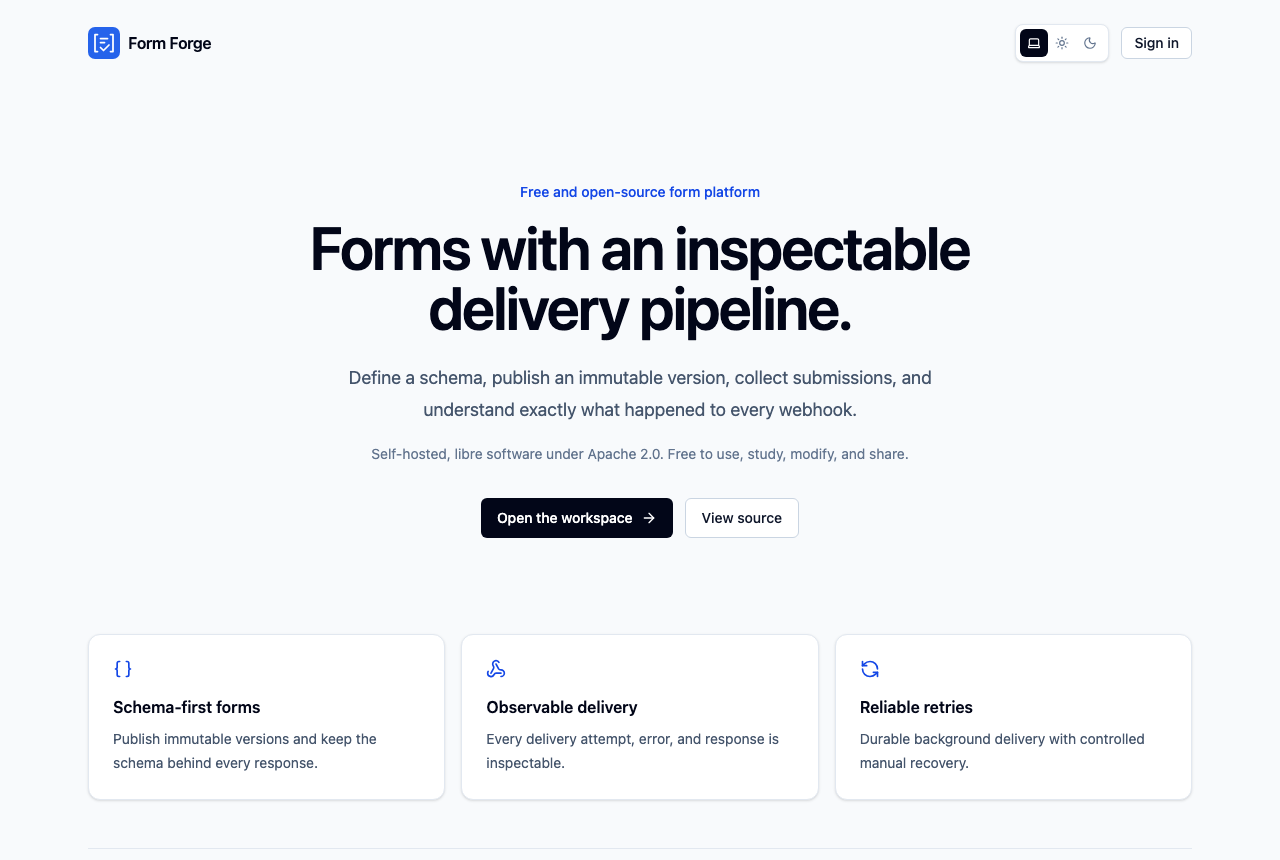
Une plateforme de formulaires auto-hébergée avec des livraisons vérifiables. Faire tourner votre propre service de formulaires : publier des formulaires versionnés, collecter les réponses dans PostgreSQL et les livrer à des webhooks signés.
- Version
- v0.2.0, 18 oct. 2026
- Fonctionne sur
- Auto-hébergé : Node.js, PostgreSQL, Inngest ; Docker Compose ou Netlify
- Licence
- Apache-2.0
Ouvrir l’instance publique: Connexion requise avec GitHub, Google ou GitLab. Aucun niveau de service n’est publié.
La description du projet ci-dessous est en anglais.
Aperçu
pnpm install
cp apps/web/.env.example apps/web/.env
pnpm db:migrate
pnpm devCe qu’il fait
Define a form as a schema, publish an immutable version, and collect responses through a hosted page, an embedded iframe or the public API. Every webhook delivery is signed and recorded with its attempts and errors, so you can see what happened to each response. Data stays in your PostgreSQL database.
Pour qui
- Teams that want forms on their own infrastructure instead of a SaaS form builder.
- Developers who need reliable webhook delivery with retries and diagnostics.
Limites
- Not a hosted SaaS: you operate PostgreSQL, the web app and the background-job server.
- Sign-in uses GitHub, Google or GitLab OAuth; there are no email and password accounts.
- Unfinished responses are not collected, and workspace packages are not published to npm.
Usages courants
Collect sign-ups on your site
Embed a published form with automatic height, or post to the idempotent submission API from your own frontend.
Feed another system
Each response goes to a signed webhook through a transactional outbox with automatic retries and manual recovery.
Close intake on time
Pause a form, set a closing time or an acceptance limit, and show a custom closed message.
Télécharger
Dernière version stable v0.2.0, publiée le 18 oct. 2026. Notes de version de v0.2.0. Données de version vérifiées le 31 oct. 2026 sur GitHub Releases.
Toute plateforme
Fichiers disponibles (1)
- Archive des sources de la version (.tar.gz), Toute plateforme Sources · Sources · 371 ko · Paquet
Extract and follow the getting-started guide.
Les étapes d’installation sont en anglais.
Vérifier un téléchargement
SHA256SUMS liste les empreintes SHA-256 des fichiers de la version. Une empreinte identique montre que votre fichier est le même que celui publié. C’est une somme de contrôle, pas une signature de l’auteur : elle ne prouve pas qui a compilé le fichier.
shasum -a 256 -c --ignore-missing SHA256SUMSPremier lancement
Install Node.js (22.22.2+, 24.15.0+ or 26+), pnpm 12.10.1 and PostgreSQL, and create a GitHub OAuth app.
Clone the repository, configure apps/web/.env, run the migrations and start the app:
pnpm install
pnpm db:migrate
pnpm dev
Start the local background-job server in another terminal:
npx --ignore-scripts=false inngest-cli@latest dev -u http://localhost:3000/api/inngestOpen localhost:3000, create a form, publish it and submit a test response.
Plateformes et manière dont elles ont été vérifiées
- Self-hosted with Docker ComposePrise en charge annoncée, sans exécution vérifiée
Production guide in deploy/README.md.
- NetlifyVérifié en fonctionnement
The public deployment linked from the repository runs on Netlify.
- RespondentsPrise en charge annoncée, sans exécution vérifiée
Hosted and embedded forms open in a modern web browser.
Documentation et assistance
- Documentation
- Code source
- Tickets et assistance
- Licence (Apache-2.0)
- Journal des modifications
- Toutes les versions
Les questions et rapports de bogue vont dans le gestionnaire de tickets du projet. Signalez les problèmes de sécurité comme indiqué dans sa politique de sécurité.