
Formulários e serviços web
Form Forge
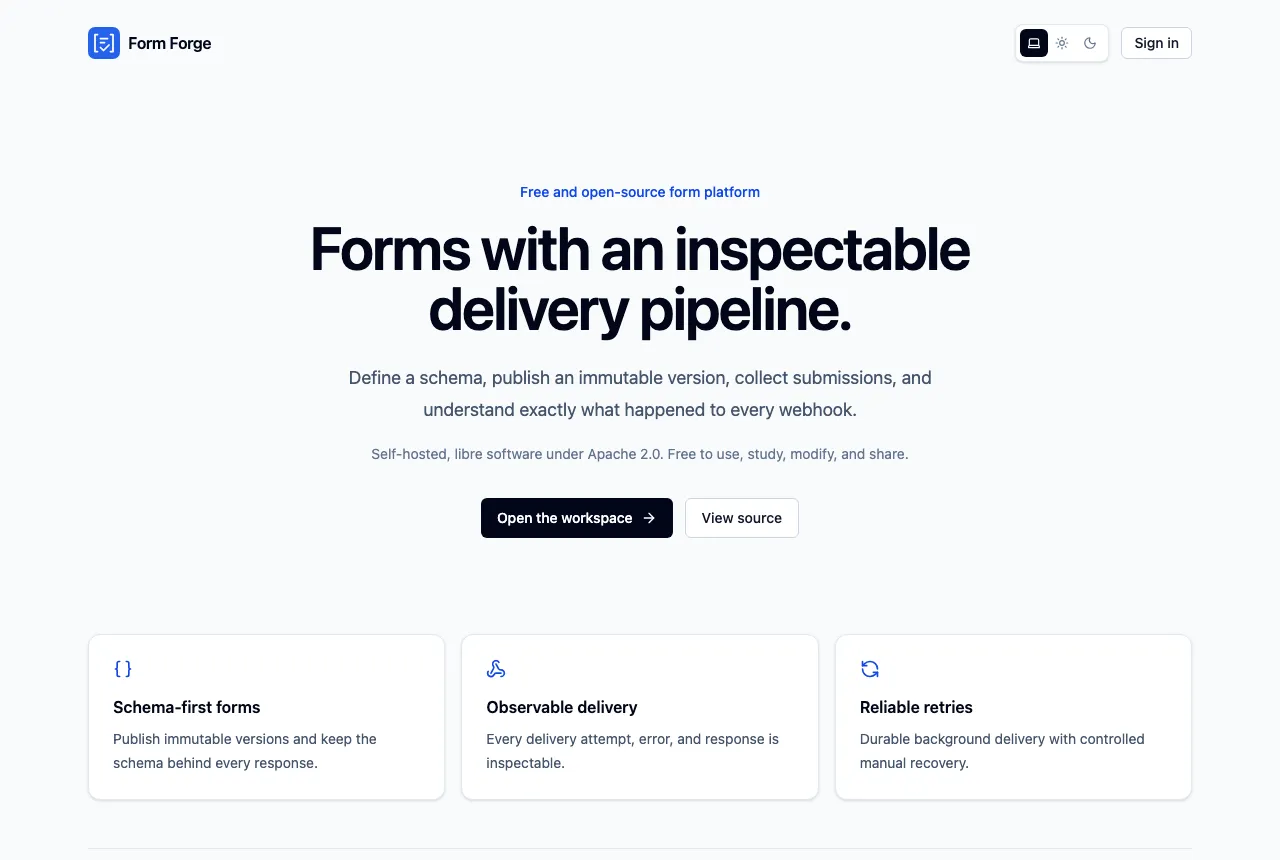
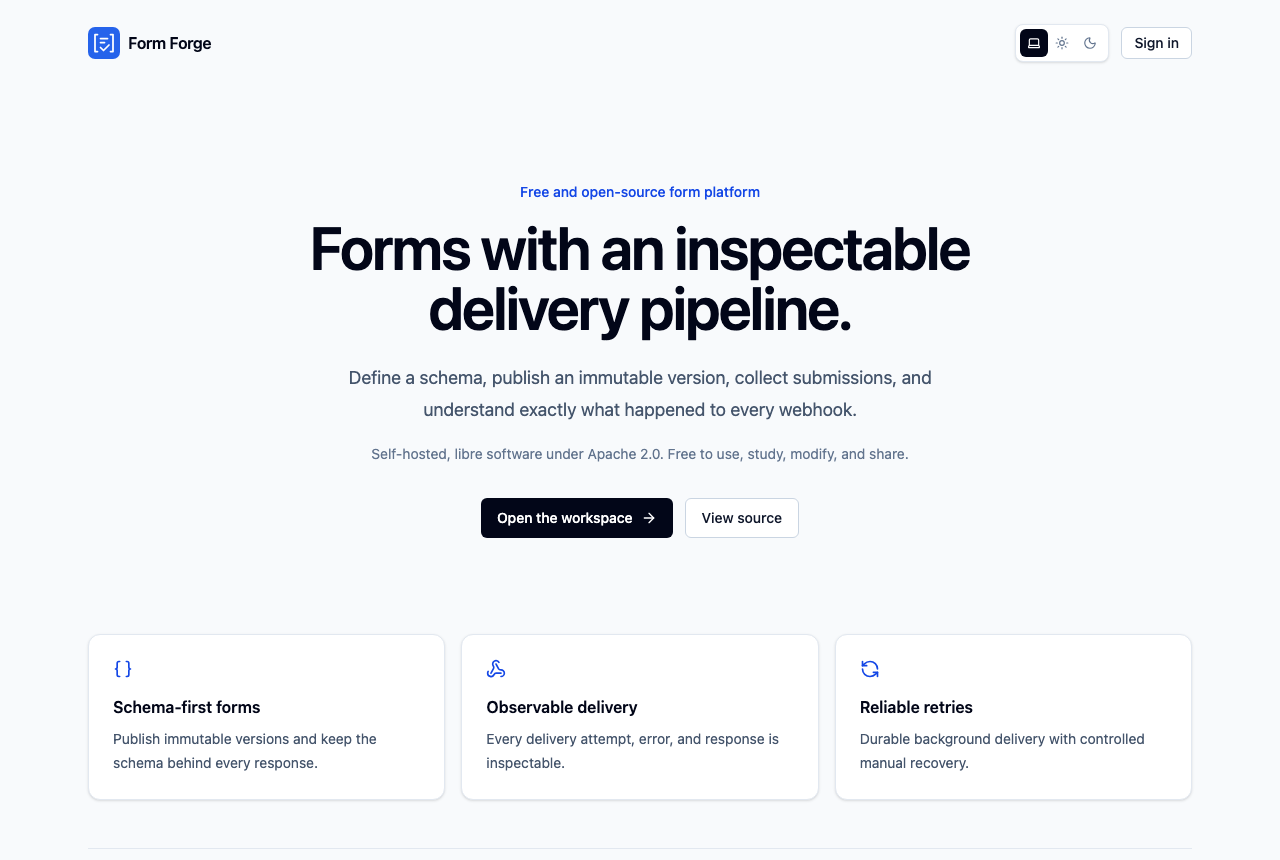
Uma plataforma de formulários auto-hospedada com entregas que dá para inspecionar. Rode seu próprio serviço de formulários: publique formulários versionados, guarde as respostas no PostgreSQL e entregue-as a webhooks assinados.
- Versão
- v0.2.0, 18 de out. de 2026
- Funciona em
- Auto-hospedado: Node.js, PostgreSQL, Inngest; Docker Compose ou Netlify
- Licença
- Apache-2.0
Abrir a instância pública: Exige login com GitHub, Google ou GitLab. Não há nível de serviço publicado.
A descrição do projeto abaixo está em inglês.
Como é
pnpm install
cp apps/web/.env.example apps/web/.env
pnpm db:migrate
pnpm devO que faz
Define a form as a schema, publish an immutable version, and collect responses through a hosted page, an embedded iframe or the public API. Every webhook delivery is signed and recorded with its attempts and errors, so you can see what happened to each response. Data stays in your PostgreSQL database.
Para quem é
- Teams that want forms on their own infrastructure instead of a SaaS form builder.
- Developers who need reliable webhook delivery with retries and diagnostics.
Limitações
- Not a hosted SaaS: you operate PostgreSQL, the web app and the background-job server.
- Sign-in uses GitHub, Google or GitLab OAuth; there are no email and password accounts.
- Unfinished responses are not collected, and workspace packages are not published to npm.
Usos comuns
Collect sign-ups on your site
Embed a published form with automatic height, or post to the idempotent submission API from your own frontend.
Feed another system
Each response goes to a signed webhook through a transactional outbox with automatic retries and manual recovery.
Close intake on time
Pause a form, set a closing time or an acceptance limit, and show a custom closed message.
Baixar
Última versão estável v0.2.0, publicada em 18 de out. de 2026. Notas da versão de v0.2.0. Dados de versões consultados em 31 de out. de 2026 no GitHub Releases.
Qualquer plataforma
Arquivos disponíveis (1)
- Código-fonte da versão (.tar.gz), Qualquer plataforma Código-fonte · Código-fonte · 371 kB · Pacote
Extract and follow the getting-started guide.
As etapas de instalação estão em inglês.
Verificar um download
SHA256SUMS lista os hashes SHA-256 dos arquivos da versão. Um hash igual mostra que o seu arquivo é idêntico ao publicado. É uma soma de verificação, não uma assinatura do autor: não prova quem compilou o arquivo.
shasum -a 256 -c --ignore-missing SHA256SUMSPrimeiro uso
Install Node.js (22.22.2+, 24.15.0+ or 26+), pnpm 12.10.1 and PostgreSQL, and create a GitHub OAuth app.
Clone the repository, configure apps/web/.env, run the migrations and start the app:
pnpm install
pnpm db:migrate
pnpm dev
Start the local background-job server in another terminal:
npx --ignore-scripts=false inngest-cli@latest dev -u http://localhost:3000/api/inngestOpen localhost:3000, create a form, publish it and submit a test response.
Plataformas e como foram verificadas
- Self-hosted with Docker ComposeSuporte declarado, sem execução verificada
Production guide in deploy/README.md.
- NetlifyVerificado em funcionamento
The public deployment linked from the repository runs on Netlify.
- RespondentsSuporte declarado, sem execução verificada
Hosted and embedded forms open in a modern web browser.
Documentação e suporte
Perguntas e relatos de bugs vão para o rastreador de issues do projeto. Relate problemas de segurança como descrito na política de segurança.